
← Previous · Film 10 of 11
When strategy moves
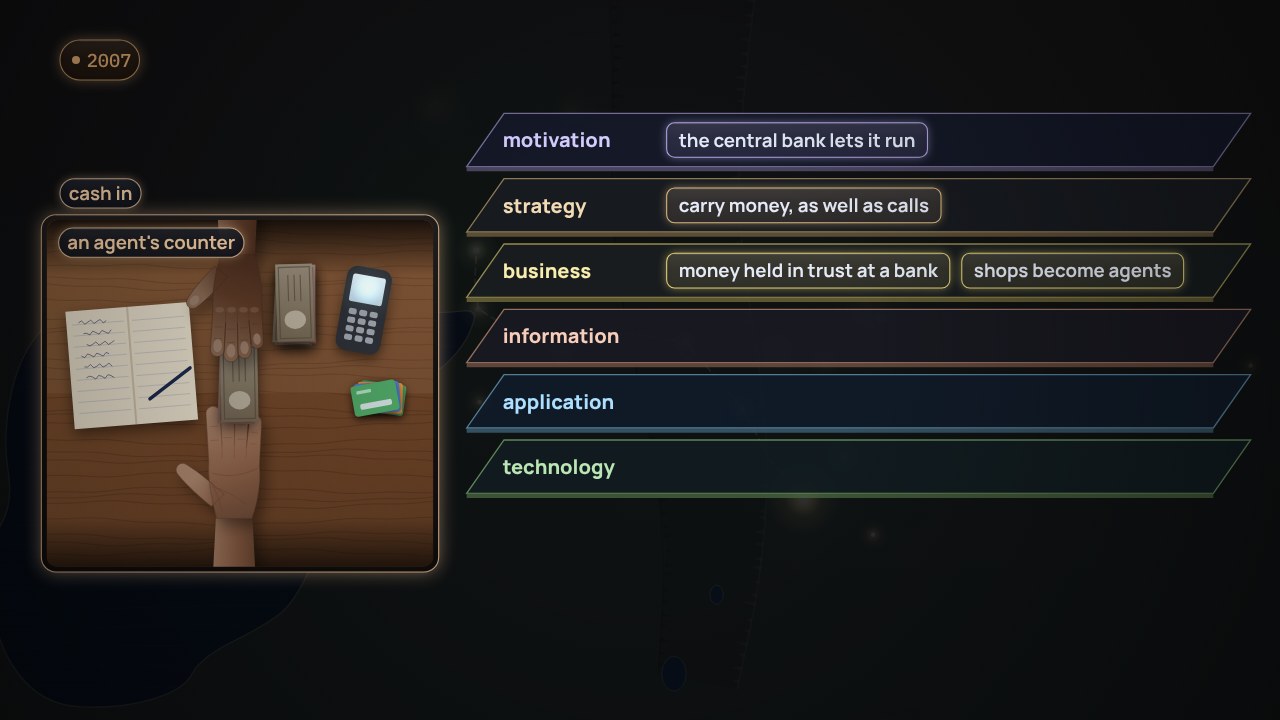
M-Pesa in Kenya, 2007. A social tariff for every eligible household. One change, walked down every layer to its owners, rules and contracts.
Topics › Enterprise architecture › The map before the data
The Pacific, 1976: Hōkūleʻa sails from Maui to Tahiti with no compass and no charts. Its navigator, Mau Piailug, holds a star compass in his memory, and chooses to teach what few still knew. Then Tomás's map, used every week and going stale in slides and decks, fails the navigator's test: could someone else sail by it? He moves it into an enterprise architecture tool. The tool brings in what other systems already keep, each record with its source's ID, and keeps each element once, with a stable ID, an owner and its evidence. A small map could live as text files in a repository; a utility needs the tool. Every change is reviewed and versioned, and every view is generated from the map, down to dbt and Databricks. An agent reads it, with its own rights on the map: it drafts, and people confirm. Then a newcomer's first day, this time with a map.
Builds on When strategy moves
Press Play, or pick a chapter. Turn on Pause and think to stop for one question at the end of chapters.

Download the videoCaption filesRead the script
Where next?
The three Pause and think questions, for a class or a team. Open one to see the answer.
This film's lab, and its situations, among the series' 12 labs and 26 situations. Your progress stays in this browser.
Take it apart: The navigator's test →Make the call: 3 situationsEvery lab
Film 11 of 11.
← Previous · Film 10 of 11
M-Pesa in Kenya, 2007. A social tariff for every eligible household. One change, walked down every layer to its owners, rules and contracts.